Information
Landmark: Lion MonumentCity: Lucerne
Country: Switzerland
Continent: Europe
Lion Monument, Lucerne, Switzerland, Europe
Overview
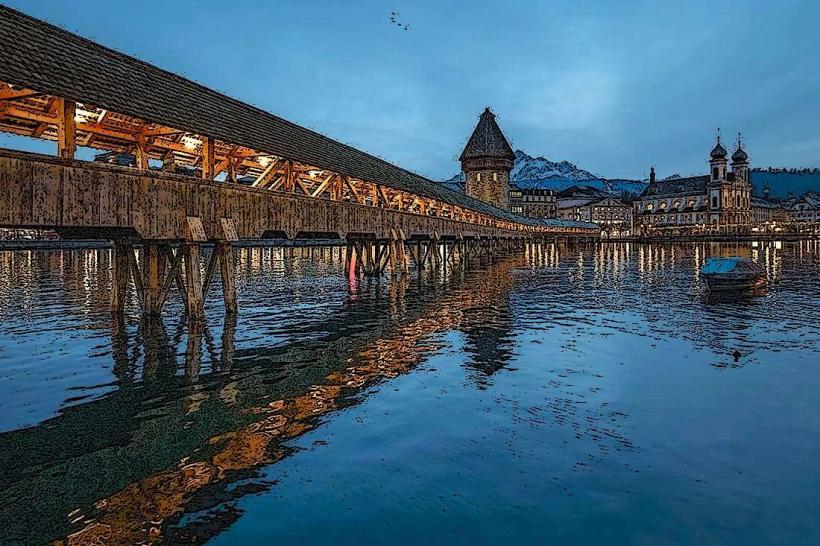
Not surprisingly, In Lucerne, Switzerland, the Lion Monument (Löwendenkmal) stands as one of the city’s most beloved sights, its weathered stone lion seeming to sleep in the cliffside, along with just steps from the city’s cobbled heritage Town, this monument honors Swiss soldiers and stands as a stark, stone reminder of sorrow and loyalty.First, moreover the Lion Monument stands in Löwenplatz, a tiny stone-paved square near the classical Town, just a short roam from the edge of Lake Lucerne.Tucked against the base of a sheer rock face in a quiet, park-like spot, the monument-completed in 1821-stands as one of Switzerland’s most famous landmarks, designed by Danish sculptor Bertel Thorvaldsen and carved by Swiss artist Lucas Ahorn to honor the Swiss Guards killed in 1792 during the French Revolution, alternatively back then, Swiss soldiers stood watch over the French royal family, their boots echoing on the palace floors.Revolutionary forces stormed the Tuileries Palace in Paris, and more than 700 Swiss Guards fell defending the royal family, their red coats luminous against the smoke; the monument stands as a tribute to their courage, sacrifice, and steadfast loyalty, on top of that the monument’s life-sized lion, hewn straight from the rock, lies slumped as if in its final moments, its heavy eyes capturing both the grief of fallen soldiers and the quiet courage they showed against impossible odds.A spear juts through the lion’s side, marking the soldier’s death, and its face twists with raw grief and searing pain, consequently the lion’s paw presses down on a cracked shield etched with the fleur-de-lis of the French crown, while the sculpture itself is carved into a sheer rock wall that looms behind it, heightening its drama.The lion appears to grow out of the rock itself, as if nature carved it to tell a story of power and grief, not only that below, chiseled into the stone, the words “Helvetiorum Fidei ac Virtuti” - “To the fidelity and bravery of the Swiss” - honor the soldiers who fell in France.The monument rises 6 meters high, with the lion stretching about 3 meters in length, its dying form heavy with sorrow and unshakable loyalty, what’s more it’s a powerful reminder of the Swiss Guards’ sacrifice-the men who stood their ground, loyal to their duty, even as steel clashed and it cost them their lives, in some ways The lion’s fierce yet mournful face stands as a symbol of the guards’ courage, their loyalty to the French crown, and the lives lost in the revolution, while many consider the Lion Monument one of the world’s most moving sculptures, capturing both the sting of death and the pride of sacrifice.You’ll find it in a quiet park shaded by tall trees, open to visitors all year, besides you can reach it with a short roam from Lucerne’s vintage Town, and it’s a favorite stop for anyone touring the city’s historic spots.Entry’s free, so you can linger as long as you like, at the same time just around the corner, you’ll find Chapel Bridge, the shimmering edge of Lake Lucerne, and the Richard Wagner Museum.At the Lion Monument, visitors can soak in the quiet shade of the trees, then wander to nearby museums and historic spots to uncover Lucerne’s past, besides more than a landmark, it’s a moving work of art that lingers in memory.It captures the tragedy of the Swiss Guard massacre and honors the soldiers who fell, blood on the cobblestones, defending the French monarchy, likewise the sculpture’s emotional pull has made it one of Switzerland’s most treasured landmarks, drawing travelers from every corner of the globe to admire its intricate lines and pause in quiet thought over its history and meaning.Many discover it as a powerful symbol of loyalty and sacrifice, a feeling that lingers with visitors who stand before it in the quiet stone courtyard, therefore the Lion Monument in Lucerne remains both deeply moving and steeped in history.As it happens, It honors the Swiss Guards who fell in 1792 during the French Revolution, and it stands as a stark reminder of loyalty and courage-like steel gleaming under a gray sky, besides carved into a sheer rock face, the monument’s dying lion seems to breathe its last in stone, making it one of Switzerland’s most unforgettable sculptures.In Lucerne, visitors can pause at the monument, take in its quiet presence, and connect with the city’s deep history and vibrant artistic spirit.
Author: Tourist Landmarks
Date: 2025-08-26